

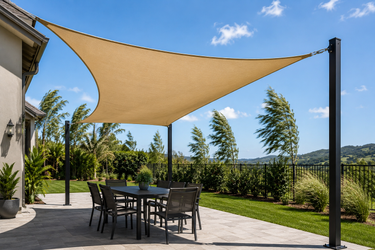
Shade Sail for Windy Areas: How to Choose the Right Fabric and Installation
The best shade sail for windy areas is usually a breathable HDPE shade sail installed with strong anchor points, marine-grade stainless steel hardware, and proper tension. Compared with waterproof fabrics, breathable HDPE allows air to pass through, reducing wind pressure and minimizing the risk of shade sail wind damage.
Choosing the right material is only part of the solution. Sail shape, installation angle, hardware quality, and local wind conditions all influence how well a wind resistant shade sail performs over time.
This guide explains how to choose the best shade sail for high winds, avoid common installation mistakes, and improve long-term durability.
Why Wind Is the Biggest Challenge for Shade Sails
Unlike permanent roofs, shade sails are flexible fabric structures. They rely on constant tension to maintain their shape, which also means they respond directly to changing wind conditions.
How Wind Creates Tension and Fabric Stress
When wind passes over and beneath a shade sail, it creates pressure differences that pull against the fabric and every attachment point. Gusts may briefly generate forces several times greater than the sail's static load.
These repeated loading cycles gradually stress the fabric fibers, seams, corner reinforcements, turnbuckles, posts, and anchors. Even a high-quality heavy duty shade sail can fail prematurely if excessive wind loads exceed its design or installation limits.
Organizations such as the American Society of Civil Engineers (ASCE) use wind load standards when designing tensile structures. Although residential shade sails are not engineered buildings, the same principles of wind pressure, structural support, and safety should be considered during installation.
Common Causes of Shade Sail Failure in Windy Areas
Most cases of shade sail wind damage are not caused by the fabric itself but by installation issues, including:
- Weak anchor points
- Loose hardware
- Incorrect installation angles
- Oversized sails spanning excessive distances
- Poor drainage causing water accumulation
- Inferior hardware materials
Many failures that appear to be "fabric tears" actually begin with hardware movement or anchor instability.
What Is the Best Shade Sail Material for Windy Areas?
Material selection has the greatest influence on long-term wind performance.
Why Breathable HDPE Performs Better in High Winds
For most installations, an HDPE shade sail is considered the best shade sail for high winds.
High-Density Polyethylene (HDPE) knitted fabric contains microscopic openings that allow air to pass through while still blocking a significant percentage of harmful UV radiation. By reducing wind pressure rather than resisting it completely, breathable fabrics experience lower structural loads.
Benefits include:
- Reduced wind resistance
- Better airflow
- Lower uplift forces
- Less fabric flapping
- Improved durability during extended outdoor exposure
Unlike woven waterproof fabrics, knitted HDPE does not completely block airflow. Instead, thousands of tiny openings allow a portion of the wind to pass through the fabric. This reduces uplift forces while still providing excellent UV protection, making HDPE the preferred material for many residential and commercial shade applications.
This combination makes breathable HDPE the preferred choice for patios, gardens, playgrounds, schools, pools, and commercial outdoor spaces where wind is common.
When Waterproof Shade Sails Are Still a Good Choice
A waterproof shade sail wind installation can still perform well under appropriate conditions.
Waterproof polyester or coated fabrics are ideal when rain protection is equally important, such as:
- Outdoor dining areas
- Cafés
- Residential patios
- Outdoor kitchens
Because waterproof materials block airflow, they experience significantly greater wind pressure than breathable fabrics.
To improve performance:
- Use smaller sail sizes
- Install steeper slopes for water runoff
- Increase structural support
- Ensure higher installation tension
- Remove the sail during severe storms
Selecting waterproof fabric should always consider both rainfall frequency and average local wind conditions.
Choosing the Right Shape for Wind Resistance
The shape of a shade sail affects how wind loads are distributed throughout the structure.
Triangle Shade Sails: Better Wind Distribution
Triangle sails generally perform better in windy conditions because each corner shares tension more evenly.
Advantages include:
- Smaller surface area
- Better load distribution
- Reduced fabric movement
- Lower wind pressure
Although they provide less overall shade coverage, they are often the safest choice for exposed locations.
Rectangle and Square Shade Sails: Maximizing Coverage Safely
Rectangle and square sails provide greater usable shade, making them popular for larger patios, decks, and outdoor seating areas.
However, larger flat surfaces naturally capture more wind.
To improve performance:
- Use shorter spans
- Install proper corner tension
- Select reinforced corners
- Choose a heavy duty shade sail
- Use stronger support posts
Large rectangular sails should never be installed with loose edges, as fabric movement accelerates wear.
Multiple Smaller Sails vs. One Large Sail
Instead of installing one oversized sail, many designers recommend using multiple smaller sails.
Benefits include:
- Reduced wind loads on each sail
- Easier maintenance
- More flexible shade layouts
- Better airflow between sails
- Lower risk of catastrophic failure
This approach is commonly used in schools, restaurants, resorts, and commercial outdoor spaces.
| Shape | Wind Performance | Coverage | Best For |
|---|---|---|---|
| Triangle | Excellent | Moderate | Coastal areas |
| Rectangle | Good | High | Patios |
| Square | Good | High | Decks |
| Multiple Sails | Excellent | Flexible | Large outdoor spaces |
Installation Tips for Windy Locations
Even the best shade sail for high winds cannot compensate for poor installation.
Selecting Strong Anchor Points
Anchor points should always connect to structurally sound supports.
Suitable options include:
- Steel posts
- Reinforced concrete walls
- Structural timber beams
- Engineered shade sail posts
Avoid attaching sails to fences, lightweight pergolas, gutters, or decorative posts that are not designed for tensile loads.
Using Stainless Steel Hardware Kits
Hardware often determines the lifespan of a wind resistant shade sail.
Marine-grade stainless steel components offer:
- Superior corrosion resistance
- High tensile strength
- Long service life
- Better performance in coastal environments
Typical hardware includes:
- Turnbuckles
- Pad eyes
- Snap hooks
- Shackles
- Chain extensions
Using hardware specifically designed for tensile structures helps maintain consistent tension over time.
Proper Tension Without Overstretching the Fabric
A common misconception is that tighter always means stronger.
Excessive tension can overload seams, anchors, and posts, while insufficient tension allows the fabric to flap violently.
The goal is firm, even tension across all corners while maintaining the fabric's intended shape.
Periodic inspections are recommended because hardware may loosen gradually due to temperature changes and repeated wind loading.
Choosing the Best Installation Angle for Wind Deflection
Installation angle affects both drainage and wind behavior.
Most manufacturers recommend installing shade sails with a noticeable slope rather than perfectly horizontal.
Benefits include:
- Better rain runoff
- Reduced wind uplift
- Improved fabric stability
- Less pooling on waterproof fabrics
Proper height differences between corners also help create a more attractive appearance.
How to Protect Your Shade Sail During Storms
Even a properly installed shade sail for windy areas has limits.
Extreme weather events can exceed any product's design capacity.
When You Should Remove Your Shade Sail
Temporary removal is recommended when forecasts predict:
- Severe storms
- Hurricanes
- Tropical cyclones
- Extremely high wind gusts
- Heavy snow accumulation
Removing the sail before extreme weather is often the simplest way to prevent expensive repairs.
Storm Preparation Checklist
Before severe weather arrives:
- Inspect all hardware
- Tighten turnbuckles
- Check anchor stability
- Look for worn stitching
- Remove accumulated debris
- Store removable sails indoors if possible
Routine maintenance significantly reduces the risk of unexpected failures.
Common Mistakes to Avoid in Windy Areas
Many cases of shade sail wind damage result from avoidable installation decisions.
Choosing Oversized Shade Sails
Bigger is not always better.
Oversized sails experience higher wind pressure, making them more difficult to tension correctly and placing greater stress on supporting structures.
Selecting an appropriately sized shade sail for windy areas usually provides better long-term performance than maximizing coverage.
Poor Installation and Loose Hardware
Loose hardware allows movement.
Movement causes vibration.
Vibration accelerates wear.
Regular inspections should include every connection point, particularly after strong winds.
Ignoring Local Weather Conditions
Every location experiences different weather patterns.
Before selecting a wind resistant shade sail, consider:
- Average annual wind speed
- Seasonal storm frequency
- Coastal salt exposure
- Snow loads
- Local building recommendations
Some regions may also require compliance with local building codes for permanent shade structures.
Although many buyers search for a specific shade sail wind rating, it's important to understand that actual wind performance depends on the complete system—including fabric, hardware, anchor strength, installation quality, and site conditions—rather than the fabric alone.
Final Thoughts
Choosing the right shade sail for windy areas is about balancing fabric selection, sail shape, structural support, and proper installation rather than relying on any single feature. For most windy environments, breathable HDPE fabric combined with quality stainless steel hardware provides the most reliable long-term performance, while waterproof options remain suitable where rain protection is the priority and additional structural considerations are addressed.
Whether you need a standard size or a custom solution, choosing a manufacturer that offers durable fabrics, reinforced construction, and multiple configuration options is just as important as selecting the right material. Sunlax Outdoor provides both breathable HDPE and waterproof custom shade sails with various shapes and sizes, helping homeowners and commercial buyers find solutions that better match different climates and installation requirements.
FAQ: Shade Sails for Windy Areas
What is the best shade sail for high winds?
A breathable HDPE shade sail with reinforced corners, marine-grade stainless steel hardware, and properly engineered anchor points generally provides the best overall wind performance.
Are waterproof shade sails suitable for windy areas?
Yes, but waterproof fabrics experience greater wind pressure. They should be installed with stronger support structures, adequate slope, and removed during severe storms if necessary.
Can a heavy duty shade sail withstand storms?
A heavy duty shade sail can handle normal wind conditions when installed correctly, but no fabric shade system is designed to remain in place during hurricanes or extreme storms.
How tight should a shade sail be?
The fabric should be evenly tensioned with minimal movement while avoiding excessive force that could overload hardware or supporting structures.
What causes shade sail wind damage?
Common causes include weak anchors, poor tension, loose hardware, oversized sails, improper installation angles, and failure to remove sails before severe weather.
Is there a universal shade sail wind rating?
No. There is no single industry-wide shade sail wind rating that applies to every product. Wind resistance depends on the fabric type, sail size, installation method, supporting structure, and local environmental conditions.