

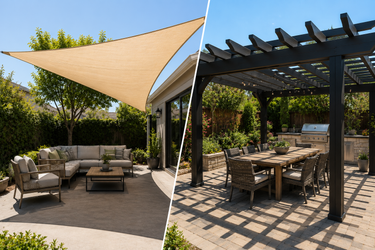
Shade Sail vs Pergola: Which Outdoor Shade Solution Is Right for Your Backyard?
When comparing shade sail vs pergola, the right choice depends on your budget, backyard layout, desired appearance, and how much flexibility you need. A pergola offers a permanent outdoor structure that enhances property value, while a shade sail provides a more affordable, customizable, and easy-to-install solution with excellent UV protection. For many homeowners looking for practical backyard shade ideas, a custom shade sail delivers the best balance between cost, coverage, and versatility.
Both options are among today's most popular outdoor shade structures, yet they serve different purposes. Understanding their strengths, limitations, and ideal applications can help you make a smarter investment that matches your outdoor lifestyle rather than simply following design trends.
According to recommendations from landscape designers and outdoor living professionals, selecting a shade solution involves balancing sun protection, ventilation, durability, maintenance requirements, and long-term costs rather than focusing solely on appearance. Climate conditions, intended use, and installation location all influence which option performs better over time.
Shade Sail or Pergola? Start with Your Outdoor Lifestyle
When comparing shade sail vs pergola, the first question should not be "Which looks better?" Instead, ask how you actually use your outdoor space.
A backyard designed for entertaining has different shade requirements than a quiet reading corner or a poolside relaxation area. Matching your shade solution to your lifestyle will usually produce better long-term satisfaction than focusing only on appearance.
Best for Outdoor Dining Areas
Outdoor dining spaces benefit from consistent shade during lunch and dinner while maintaining good airflow.
A pergola creates a defined outdoor room and works well with climbing plants, lighting, or retractable canopies. However, an open-roof pergola provides only partial sun protection unless additional shade materials are installed.
A high-quality shade sail can deliver:
- Broad UV protection during peak sunlight hours
- Better air circulation than many solid roof systems
- Flexible positioning to match the sun's angle Minimal visual obstruction
For homeowners prioritizing function over architectural presence, a shade sail is often one of the most practical patio shade options available.
Best for Pools and Lounging Spaces
Swimming pools present unique shading challenges because direct sunlight shifts throughout the day.
Shade sails are particularly effective because they can be installed at varying heights and angles, creating larger shaded zones without enclosing the area.
Pergolas work well beside pools as gathering spaces, but covering the water itself typically requires additional shade fabric or retractable systems.
When considering retractable shade vs pergola, retractable fabric systems offer adjustable coverage, while fixed pergolas remain stationary. Shade sails strike a balance by providing generous coverage with a lighter visual footprint.
Best for Small Backyards and Patios
Limited outdoor space requires careful planning.
Large pergolas can visually dominate compact patios, while properly sized shade sails preserve openness without sacrificing comfort.
They are especially suitable for:
- Narrow side yards
- Small patios
- Apartment courtyards
- Urban gardens
- Corner seating areas
Among today's backyard shade ideas, shade sails remain one of the easiest solutions to adapt to smaller properties.
Comparing Shade Sail and Pergola Side by Side
Although both products provide shade, they differ significantly in installation, maintenance, flexibility, and overall ownership costs.
| Feature | Shade Sail | Pergola |
|---|---|---|
| Initial Cost | Lower | Higher |
| Installation | Fast and flexible | Larger construction project |
| UV Protection | Excellent with quality HDPE fabric | Depends on roof design |
| Airflow | Excellent | Good |
| Custom Sizes | Highly customizable | Limited by structure |
| Maintenance | Low | Moderate |
| Ideal For | Flexible outdoor coverage | Permanent outdoor living spaces |
Shade Coverage and UV Protection
Modern shade sails made from commercial-grade HDPE fabric can block a significant percentage of harmful UV radiation while allowing hot air to escape through breathable construction.
By comparison, traditional pergolas provide filtered sunlight rather than complete shade. Homeowners often add fabric covers, retractable roofs, or climbing plants to improve protection.
This comparison explains why pergola vs shade sail discussions frequently focus on UV performance rather than appearance alone.
According to guidance from dermatology organizations and building professionals, reducing direct UV exposure is an important consideration when designing outdoor living spaces, especially around children's play areas and pools.
Installation Time and Flexibility
Installation represents one of the largest differences in the shade sail vs pergola comparison.
Pergolas usually require:
- Concrete footings
- Structural permits in some locations
- Professional installation
- Longer construction timelines
By contrast, shade sails generally require only properly positioned anchor points and appropriate tensioning hardware.
Because they can be mounted between buildings, poles, fences, or existing structures, they adapt well to changing outdoor layouts.
For homeowners who may redesign their backyard in the future, this flexibility becomes a major advantage.
Cost, Maintenance, and Lifespan
When evaluating pergola cost vs shade sail, the financial difference is often substantial.
A pergola involves expenses beyond the structure itself, including labor, foundations, finishes, and periodic maintenance.
Shade sails generally require:
- Occasional cleaning
- Seasonal inspections
- Proper tension adjustment
- Hardware checks
Quality UV-stabilized fabrics are designed for long-term outdoor exposure, while powder-coated stainless hardware helps resist corrosion.
Overall ownership costs are typically lower than many permanent structures, making shade sails attractive for homeowners seeking value without sacrificing performance.
Which Option Fits Different Homeowners?
Choosing between shade sail vs pergola often depends more on your circumstances than the products themselves.
Renters vs. Homeowners
Homeowners typically have greater freedom to install permanent outdoor structures.
Renters, however, often need shade solutions that can be removed without major property modifications.
Shade sails provide several advantages:
- Easier installation
- Lower upfront investment
- Less permanent construction
- Greater portability
These characteristics make them one of the most flexible shade sail alternatives to traditional built structures.
Temporary Shade vs. Permanent Structures
Not every outdoor space requires permanent construction.
If your backyard evolves frequently—perhaps because children are growing, landscaping changes, or furniture layouts are updated—a removable shade solution can provide greater long-term flexibility.
Pergolas excel when the goal is creating a permanent outdoor living room that becomes part of the home's architecture.
Shade sails work better when adaptability matters more than permanence.
Modern Homes vs. Traditional Gardens
Design style also influences the decision.
Modern homes often feature clean lines, minimalist landscaping, and geometric outdoor layouts. Triangular or rectangular shade sails naturally complement these contemporary designs.
Traditional gardens frequently incorporate wood, stone, climbing vines, and ornamental planting, making pergolas a strong visual fit.
Fortunately, today's outdoor shade structures include enough design options that either solution can be integrated successfully with thoughtful planning.
Can You Combine a Pergola with a Shade Sail?
Absolutely.
Rather than viewing the discussion as shade sail vs pergola, many designers now recommend combining both to maximize comfort and flexibility.
Adding Shade Sails Above Existing Pergolas
One increasingly popular approach involves installing shade sails above or beneath existing pergolas.
Benefits include:
- Increased UV protection
- Better rain resistance depending on fabric choice
- Reduced heat buildup
- Seasonal flexibility
- Modern visual contrast
Instead of replacing an existing pergola, homeowners can upgrade its functionality through strategically installed shade sails.
Creating Layered Shade for Large Outdoor Spaces
Large backyards often include multiple activity zones.
For example:
- A pergola over the outdoor dining area
- Shade sails above children's play spaces
- Additional sails protecting poolside lounges
- Smaller sails covering walkways
This layered approach creates a more dynamic outdoor environment while maintaining architectural consistency.
Many landscape designers now incorporate multiple forms of shade rather than relying on a single large structure.
When a Custom Shade Sail Is the Better Choice
Although pergolas have undeniable architectural appeal, there are many situations where custom shade sails outperform permanent structures.
Irregular Layouts and Corner Spaces
Most backyards are not perfect rectangles.
Trees, fences, retaining walls, gardens, and existing buildings create irregular layouts that are difficult for pergolas to accommodate economically.
Custom shade sails can be manufactured in a wide range of shapes and dimensions, allowing coverage to fit unique outdoor spaces while maximizing usable shade.
This flexibility is one reason many homeowners researching shade sail vs pergola ultimately choose custom fabric systems.
Covering Areas That Pergolas Can't Reach
Pergolas work best when installed over flat, open spaces.
Shade sails can extend coverage to areas such as:
- Driveways
- Side yards
- Courtyards
- Rooftop terraces
- Children's play areas
- Garden pathways
- Pool edges
Because they rely on strategically positioned anchor points rather than a complete supporting frame, they can reach spaces that conventional pergolas simply cannot. Among available patio shade options, few alternatives offer this level of installation flexibility.
Final Thoughts
The shade sail vs pergola decision ultimately comes down to how you want your backyard to function. Pergolas create lasting architectural spaces that suit homeowners seeking permanence, while shade sails provide flexible, cost-effective coverage that adapts to changing outdoor needs. For many properties, combining both creates the most practical and visually appealing outdoor environment.
Whether you're upgrading a patio, protecting a pool, or creating comfortable outdoor dining space, choosing the right shade solution starts with understanding your layout and lifestyle. For homeowners looking for customizable sizing, durable outdoor fabrics, and flexible installation options, Sunlax Outdoor offers custom-made and ready-made shade sails designed for a wide range of residential outdoor projects.
FAQ: Shade Sail vs Pergola
Is a shade sail cheaper than a pergola?
Yes. In most situations, a shade sail has significantly lower material and installation costs, making it a cost-effective outdoor shading solution.
Which provides better UV protection?
High-quality HDPE shade sails generally offer excellent UV protection while maintaining airflow. Pergolas usually require additional roofing materials or fabric covers to achieve similar protection.
Are shade sails durable?
Commercial-grade shade sails are designed for outdoor use and can withstand years of UV exposure when properly installed and maintained.
Can I install a shade sail myself?
Many homeowners successfully complete DIY installations using suitable mounting hardware and secure anchor points. Larger or custom installations may benefit from professional assistance.
Which adds more value to a home?
Pergolas can contribute to property value as permanent structures. Shade sails add functional outdoor living space at a lower investment and are often chosen for their flexibility and affordability rather than resale value alone.