

Triangle vs Rectangle Shade Sail: Which Should You Choose?
If your priority is maximum coverage and efficient shading, a rectangle shade sail is usually the better choice. If you value flexibility, visual appeal, and creative layouts, a triangle shade sail is often more suitable. In practice, the right option depends on your space, layout, and installation conditions.
What Are the Main Differences Between Triangle and Rectangle Shade Sails?
The primary difference between a rectangle shade sail and a triangle shade sail lies in shape, coverage efficiency, and tension distribution. A rectangle shade sail uses four anchor points, creating a broader and more uniform shaded area. This makes it ideal for patios, decks, and larger outdoor spaces.
A triangle shade sail, on the other hand, uses three anchor points and typically produces a more dynamic, angled look. It is often chosen for smaller areas or decorative applications where flexibility matters.
From a structural perspective, both designs rely on proper tension, but a rectangle shade sail distributes load more evenly across four corners, while a triangle shade sail concentrates tension along three points. This difference influences both installation and long-term stability.
When to Choose a Triangle Shade Sail for Design and Aesthetics
A triangle shade sail is often selected for its visual appeal. Its angular form creates a layered, modern look that works well in contemporary outdoor spaces.
In compact patios or balconies, a triangle shade sail adapts more easily to limited anchor points. It can also be positioned at different heights to create depth and visual interest, something a rectangle shade sail may not achieve as flexibly.
Additionally, triangle designs are useful when partial shading is sufficient. Instead of covering the entire area, they allow sunlight to pass through certain sections, creating a balanced mix of light and shade.
Why Rectangle Shade Sails Are Better for Maximum Coverage
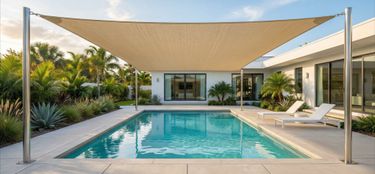
When the goal is consistent and wide coverage, a rectangle shade sail is generally more effective. Its geometry allows it to cover larger areas with fewer gaps, making it ideal for outdoor dining zones, pool areas, and extended patios.
Because of its four-corner structure, a rectangle shade sail provides a more predictable shading pattern throughout the day. This reduces the need for repositioning or adding extra sails.
Another advantage is efficiency. For users looking to maximize shaded space with minimal installations, a rectangle shade sail often delivers better results compared to using multiple triangle shade sail units.
Can You Mix Triangle and Rectangle Sails for a Modern Look?
Combining a rectangle shade sail with a triangle shade sail is a practical way to balance function and design. This approach is commonly used in larger outdoor areas where a single sail may not provide sufficient coverage or visual interest.
A rectangle shade sail can act as the primary shading structure, while a triangle shade sail complements it by covering smaller sections or adding layered depth. By adjusting angles and heights, the overall structure becomes more dynamic and adaptable.
Benefits of mixing shapes:
- Enhances visual appeal with layered geometry
- Improves coverage in irregular spaces
- Makes better use of existing anchor points
This combination approach works particularly well in patios with varied layouts or architectural constraints.
Installation Differences: Triangle vs. Rectangle Layouts
Installation planning differs slightly between a triangle shade sail and a rectangle shade sail due to their structural requirements.
A rectangle shade sail requires four anchor points placed with precision. The distances between points should be balanced to ensure even tension. Any misalignment may lead to uneven stress distribution.
A triangle shade sail is generally easier to fit into irregular layouts because it requires fewer anchor points. However, proper height variation is still necessary to maintain tension and allow water runoff.
Key installation considerations:
- Leave 5–10% space between anchor points and the sail
- Ensure at least one corner is lower for drainage
- Use strong, stable mounting structures
Both types benefit from careful measurement and planning before installation.
Which Shape Is Best for High Wind Areas?
Wind conditions are an important factor when choosing between a triangle shade sail and a rectangle shade sail. While both can perform well, their behavior under wind load differs slightly.
A triangle shade sail, with fewer anchor points, may allow more flexibility and reduce concentrated stress during gusts. This can be beneficial in areas with variable wind conditions.
A rectangle shade sail, due to its larger surface area, may experience higher wind pressure. However, when installed with proper tension and angle, it can remain stable and effective.
In high-wind environments, the most important factors are not just shape but also installation quality, material strength, and the ability to remove the sail during extreme weather.
Additional Considerations for Choosing the Right Shape
Beyond shape and coverage, several practical factors influence the choice between a rectangle shade sail and a triangle shade sail. One of the most important is the layout of your existing structures. If anchor points are already fixed in place, the shape you choose should align naturally with those positions rather than forcing adjustments.
Another consideration is maintenance. A properly tensioned rectangle shade sail may require less frequent adjustment because of its balanced structure. A triangle shade sail, depending on its placement, may need occasional re-tensioning to maintain its shape.
Climate also plays a role. In areas with heavy rainfall, both shapes should be installed with a slope to prevent water pooling. In hotter regions, breathable materials combined with the right shape can improve airflow and comfort.
Finally, long-term usability should be considered. While both a rectangle shade sail and a triangle shade sail can provide effective shading, selecting the right shape based on your space and needs will reduce future adjustments and improve overall satisfaction.
Practical Layout Tips for Real Patio Scenarios
In real-world applications, choosing between a rectangle shade sail and a triangle shade sail often comes down to how your patio is structured. For example, in a rectangular backyard with evenly spaced anchor points, a rectangle shade sail can cover the area efficiently without leaving exposed corners.
In contrast, for patios with obstacles such as trees, railings, or uneven walls, a triangle shade sail offers more flexibility. It can be angled around these elements without requiring major structural changes. This makes it a practical option for retrofitting existing outdoor spaces.
Another useful approach is staggered installation. By placing a triangle shade sail slightly higher than a rectangle shade sail, you can improve airflow while maintaining consistent shade. This setup is especially beneficial in warmer climates where heat buildup is a concern.
Long-Term Value and Design Strategy
When evaluating long-term value, both a rectangle shade sail and a triangle shade sail should be considered not only for their immediate function but also for how they fit into your overall outdoor design.
A rectangle shade sail is often chosen for its efficiency and simplicity, making it a strong option for users who prioritize function and ease of maintenance. A triangle shade sail, meanwhile, offers more design flexibility and can evolve with your space if you plan to expand or modify your layout in the future.
Over time, many homeowners find that combining both shapes provides the best balance. Starting with a rectangle shade sail for core coverage and later adding a triangle shade sail can create a layered system that adapts to changing needs without requiring a full redesign.
Conclusion
Both shade sails offer distinct advantages depending on your space and design goals. Choosing the right shape ensures better performance, durability, and visual balance. For reliable quality and flexible design options, SUNLAX provides practical solutions to help you create an efficient and well-designed outdoor shading system.