

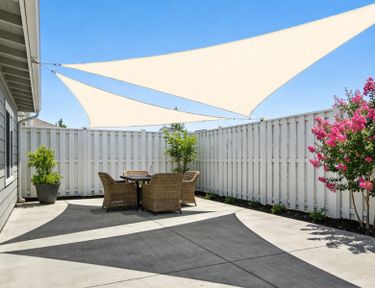
How to Measure for a Custom Shade Sail
To measure a custom size shade sail correctly, you must measure the distances between anchor points by shape (triangle, square, or quadrilateral), then allow for a 10% reduction on each side for hardware and proper tension. This ensures your sun shade sail custom size fits securely and performs as intended.
What Measurements Do You Need for a Custom Shade Sail?
When ordering made to measure sail shades, always measure the anchor point distances, not the fabric itself. The final custom size shade sail will be slightly smaller to accommodate installation hardware.
Key requirements:
- Measure all sides between anchor points
- Round measurements up to the nearest inch
- Identify the correct shape (triangle, square, or quadrilateral)
This method ensures your sun shade sail custom size will install properly without being too loose or overly tight.
How to Measure Triangle, Rectangle, and Irregular Spaces
Accurate shape-based measurement is critical for any custom size shade sail, especially for non-standard layouts.
Triangle Shade Sail
Measure all three sides:
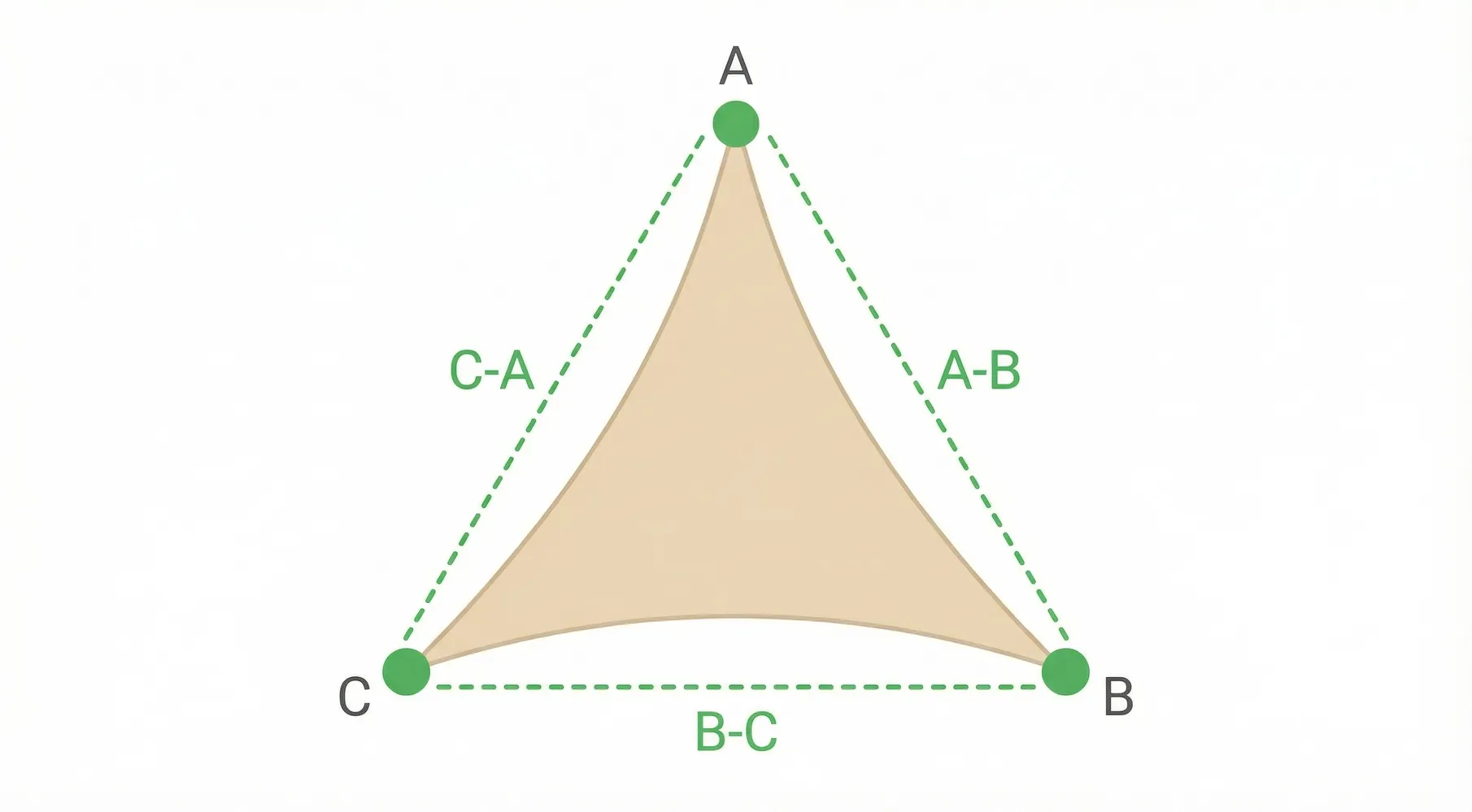
- A–B
- B–C
- C–A
These three distances fully define your made to measure sail shades triangle and ensure proper fit.
Square Shade Sail
Measure all four sides individually:
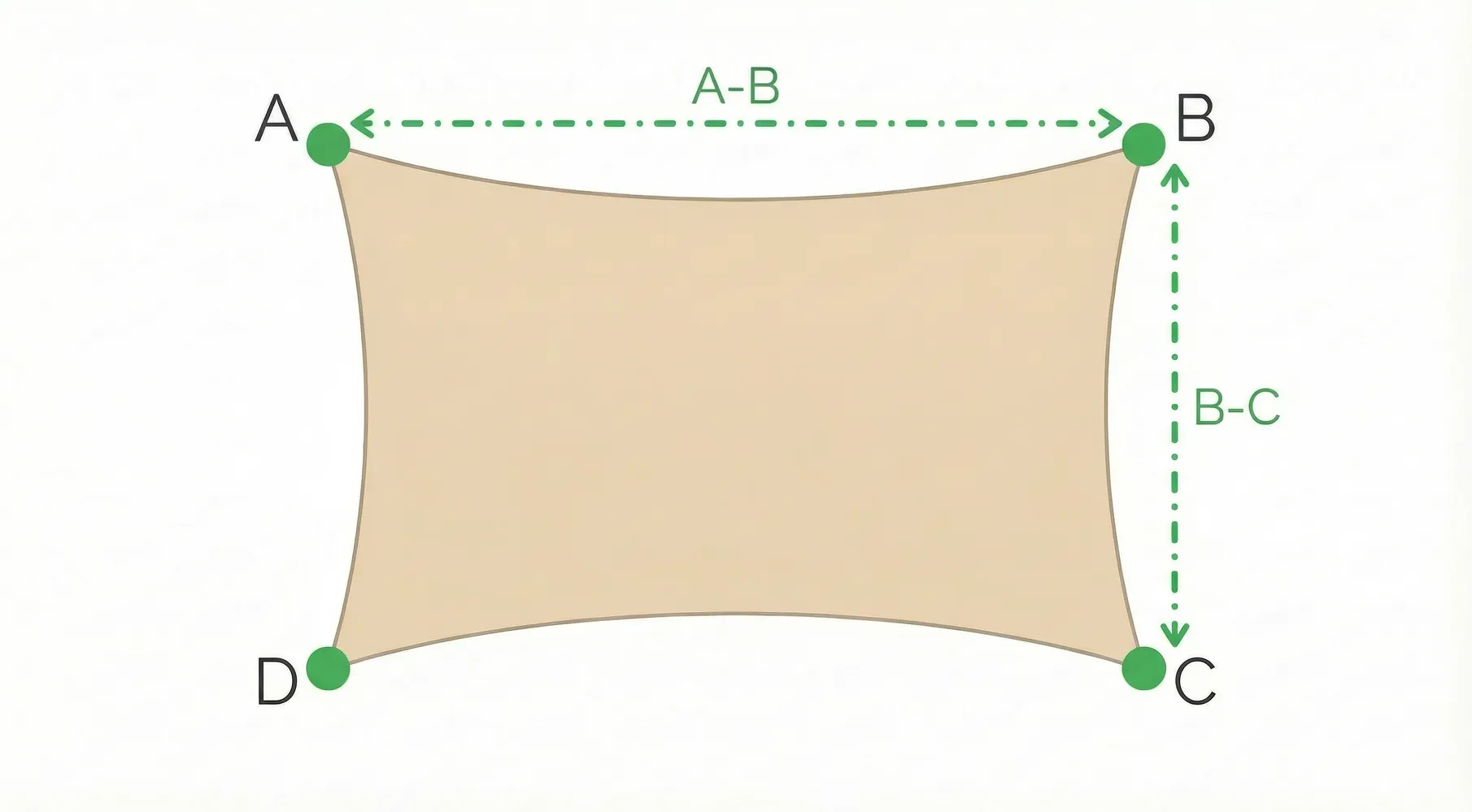
- A–B
- B–C
- C–D
- D–A
Even if the area looks perfectly square, do not assume equal sides. Measuring each side ensures your sun shade sail custom size will not twist or misalign during installation.
Quadrilateral Shade Sail
For irregular four-sided areas, you must measure:
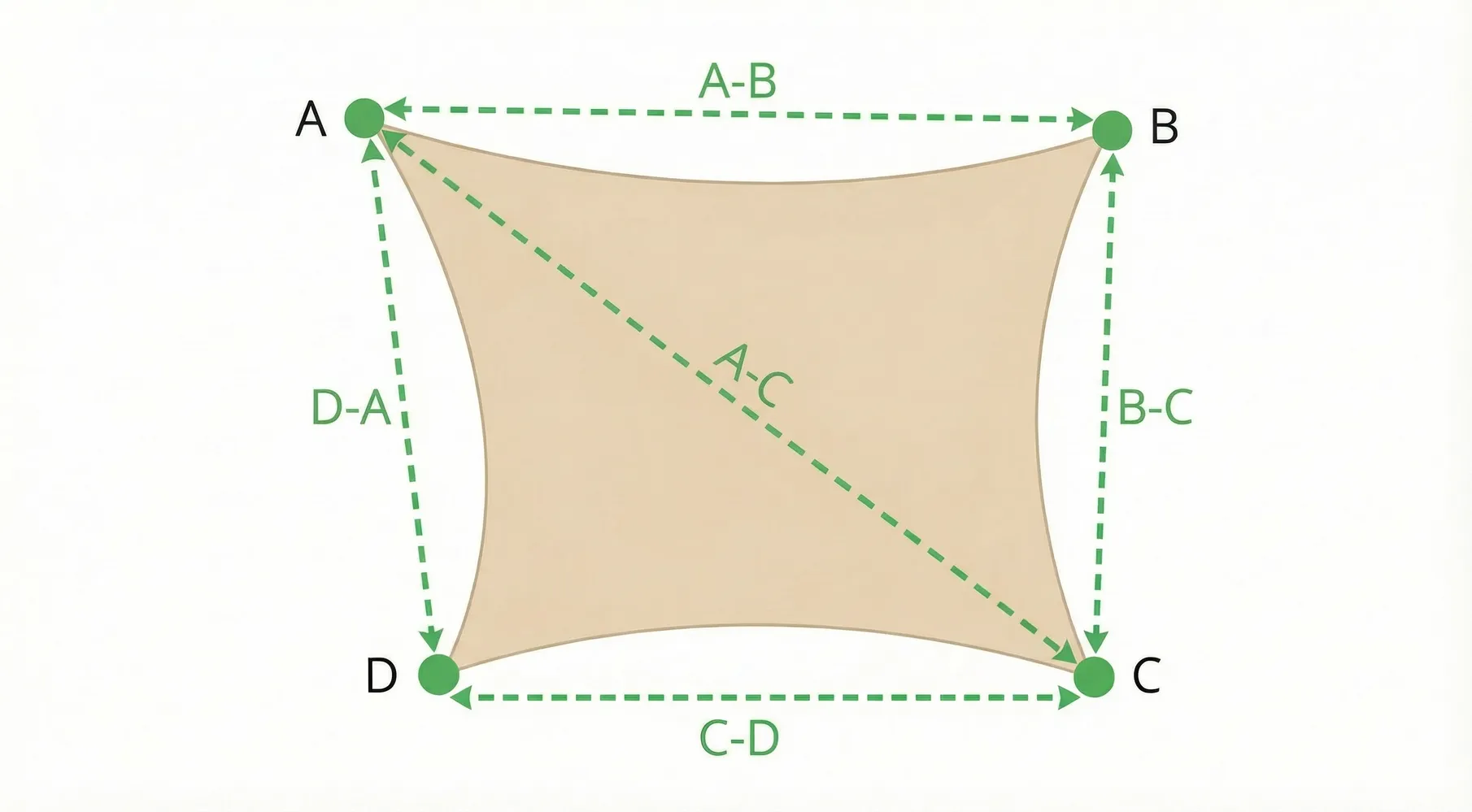
- All four sides
- At least one diagonal (A–C or B–D)
The diagonal measurement “locks in” the shape and prevents distortion. This step is essential when ordering a custom size shade sail for complex layouts.
How Much Space Should You Leave for Hardware and Tension?
According to standard installation rules, the final custom size shade sail is intentionally smaller than your measured space.
Key rule: Each side is reduced by 10% to allow for hardware and tension
This clearance:
- Ensures proper tensioning
- Prevents excessive flapping in wind
- Extends the lifespan of your made to measure sail shades
Skipping this step is a common reason why a sun shade sail custom size fails to install correctly.
Common Measuring Mistakes That Cause Sagging
Even with a high-quality custom size shade sail, incorrect measurements can lead to sagging or poor performance.
Avoid these mistakes:
- Measuring the sail area instead of anchor points
- Not rounding up measurements
- Ignoring the required 10% reduction
- Skipping diagonal measurements in irregular spaces
Accurate data ensures your made to measure sail shades maintains proper tension and structural stability.
Should You Choose HDPE or Waterproof PES for Custom Sizes?
Material selection directly impacts how your sun shade sail custom size performs after installation.
HDPE (Breathable Fabric)
- Allows airflow and reduces heat
- Blocks up to 90–95% UV rays
- Ideal for patios and hot climates
Waterproof PES
- Provides rain protection
- Requires correct slope for drainage
- Suitable for areas needing water resistance
Choosing the right material is part of a Custom Made solution, ensuring your custom size shade sail matches both environment and usage needs.
Conclusion
Measuring correctly is the foundation of a reliable custom size shade sail. By following shape-based rules and proper allowances, you can ensure a secure, long-lasting installation. For consistent quality and precise sizing support, SUNLAX offers dependable solutions tailored to your project needs.