

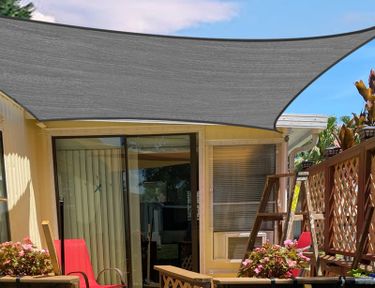
How to Install a Shade Sail on a Fence or Wall
Yes—you can install a shade sail on a fence or wall, but only if the structure is solid, spacing is reserved (15–30 cm), and the sail is installed at a proper angle (20–40°) with balanced tension. Following these rules ensures your attaching shade sail to fence setup is safe, stable, and long-lasting.
Can a Fence Hold a Shade Sail Safely?
A fence can support a shade sail fence installation, but its strength determines long-term performance. Solid wood posts set in concrete, metal frames, or masonry walls are typically reliable, while lightweight panels or aging fences are prone to bending or failure.
When attaching shade sail to fence, the load is continuous rather than static. This means even moderate wind can increase tension significantly. For this reason, combining fence anchor points with at least one wall or reinforced post is often a safer approach for a durable fence sun shade system.
What Hardware Do You Need for Fence or Wall Installation?
Using the right hardware is essential when installing a shade sail fence setup. Each component plays a role in safety and durability.
Key hardware includes:
- Pad eyes (for fixed anchor points)
- Turnbuckles (for adjustable tension)
- Snap hooks or D-shackles (for connections)
For wall installations, expansion bolts are recommended. For attaching shade sail to fence, ensure bolts go into structural posts—not just panels.
High-quality stainless steel hardware improves corrosion resistance and extends the life of your fence sun shade.
Step-by-Step Fence Shade Sail Installation Guide
A logical installation manual helps prevent uneven tension and structural stress when setting up a fence sun shade.
Step 1: Plan Anchor Layout
Measure the distance between fixation points accurately. Leave a 15–30 cm gap between each anchor point and the sail corner to allow room for hardware or ropes. This is a key requirement for any attaching shade sail to fence project.
Step 2: Secure Mounting Points
Fix mounting hardware onto solid structures such as walls, steel columns, or reinforced wooden posts. Avoid installing directly onto weak fence panels in a shade sail fence setup.
Step 3: Connect the Shade Sail
Ensure at least one corner is lower than the others. The recommended installation angle is 20–40°, which improves drainage and reduces stress on the sail.
Step 4: Apply Controlled Tension
Ensure at least one corner is lower than the others. The recommendedConnect all corners gradually. Whether installing a Triangle Shade Sail or a Rectangle Shade Sail, alignment should be confirmed before tightening. Tighten until the surface is smooth and wrinkle-free, but stop before over-tensioning. installation angle is 20–40°, which improves drainage and reduces stress on the sail.
How to Add Proper Tension Without Damaging the Fence
Tension must be applied carefully when attaching shade sail to fence. The sail should be tight enough to remove wrinkles but not so tight that it overloads the structure.
Maintaining the 15–30 cm spacing allows hardware to function properly and prevents excessive pulling force on the fence. A well-installed fence sun shade distributes tension evenly, which helps protect both the sail and the supporting structure over time.
Common Fence Installation Mistakes to Avoid
Many issues with a shade sail fence come from avoidable errors. One common problem is installing directly onto weak fence panels instead of structural posts, which leads to instability over time.
Another frequent mistake is ignoring tension spacing, resulting in either sagging or excessive strain. Additionally, placing all anchor points at the same height can cause water pooling, which increases load and accelerates wear. Careful planning is essential for any attaching shade sail to fence project.
Best Shade Sail Materials for Fence Installations
Material choice affects how well your shade sail fence performs over time.
HDPE (High-Density Polyethylene)
- Breathable and UV-resistant (up to 90–95%)
- Reduces wind load on fences
- Ideal for most fence sun shade setups
Waterproof PES (Polyester)
- Provides rain protection
- Heavier and requires stronger anchor points
- Better suited for wall-based installations
Choosing the right material ensures your attaching shade sail to fence project remains durable and functional.
Conclusion
Installing a shade sail fence is an effective way to create shade and privacy, provided the structure and tension are handled correctly. For consistent quality and reliable performance, SUNLAX offers solutions that simplify installation while ensuring long-term durability.