

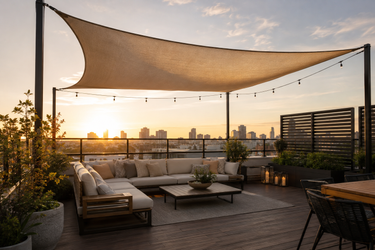
Shade Sail for Rooftop Patios: Design Ideas for Wind, Sun & Privacy
A well-designed shade sail for a rooftop patio can turn an exposed roof deck into a more comfortable outdoor living area without enclosing the entire space. The most practical approach is to combine UV protection, airflow, appropriate anchor points, and privacy control.
For sunny rooftops, breathable HDPE shade sails are useful where heat and wind are major concerns, while waterproof fabrics can provide additional protection for outdoor dining. When privacy is also important, a custom rooftop shade sail can be paired with a privacy screen to create a more functional roof terrace.
Why Rooftop Patios Need a Different Shade Solution
A rooftop patio is more exposed than a typical backyard or ground-level deck. The lack of nearby trees and buildings can increase direct sunlight, while elevated locations may experience stronger and more variable wind. This makes rooftop patio shade more than a decorative feature: the shade structure needs to suit the physical conditions of the roof.
More Sun Exposure Than Ground-Level Patios
A roof deck often receives uninterrupted sunlight for several hours because there are fewer surrounding structures to provide natural shade. Furniture, flooring, and seating areas can therefore become uncomfortable during the hottest part of the day.
A well-positioned rooftop sun protection system should consider the direction of sunlight at different times rather than simply covering the largest possible area. A triangular sail may work well over a compact seating area, while a rectangular sail can provide broader coverage over a dining table or lounge.
Material performance also matters. HDPE shade fabrics commonly provide substantial shade and UV protection while maintaining airflow, making them useful for exposed rooftop spaces. When comparing fabrics, consider shade coverage, UV protection, fabric weight, breathability, and the specific performance specifications provided by the manufacturer.
Wind, Heat, and Privacy Challenges
Wind is one of the main differences between a rooftop and a ground-level patio. A large, poorly tensioned sail can catch wind and place unnecessary loads on its mounting points. Heat is another concern because a solid overhead structure may reduce sunlight but can also restrict airflow.
For this reason, roof deck shade ideas should consider airflow as well as coverage. Breathable fabric allows some air movement through the material, while a carefully tensioned shape helps reduce excessive flapping.
Privacy can be equally important on apartment rooftops. Neighboring buildings may overlook a terrace from several directions, so overhead rooftop privacy shade alone may not solve the problem. Vertical privacy screens can supplement overhead shade where sightlines need to be controlled.
Planning a Shade Sail for a Rooftop Space
Before choosing a shade sail for a rooftop patio, check the roof structure, available anchor points, walking paths, drainage, and building rules. Rooftop installations need to balance shade coverage with structural safety and everyday usability.
Understanding Building Restrictions and Anchor Options
Start by identifying secure mounting points, such as structural walls or properly engineered posts. Railings and parapets should not be assumed to support a shade sail without professional confirmation. Apartment residents should also check building-management rules before drilling or installing permanent anchors.
Accurate measurements are essential for proper tension and a suitable fit between the sail and its anchor points.
Choosing the Right Height Without Blocking Views
The sail should provide shade without making the rooftop feel enclosed. Using different anchor heights can create tension while maintaining open sightlines and improving the sail's ability to provide effective coverage.
For waterproof sails, a slope is also important for drainage.
Best Shade Sail Designs for Rooftop Patios
The right shade sail for roof terrace depends on the rooftop's size, layout, and intended use. Triangle sails suit compact spaces, while rectangular or multiple-sail layouts work better for larger areas.
Compact Roof Terraces
For a small roof terrace, a triangular sail can provide focused apartment rooftop shade over a seating or dining area without making the space feel enclosed. Keeping the edges of the terrace open can also preserve views and improve airflow.
Large Entertainment Rooftops
Larger rooftops can benefit from rectangular or quadrilateral sails that cover dining, lounge, or outdoor kitchen areas more efficiently. When planning roof deck shade ideas, leave doors, stairs, walkways, and important sightlines unobstructed.
Multi-Sail Layouts for Flexible Coverage
Using several smaller sails can divide a large rooftop into functional zones while keeping some areas open. For example, one sail can cover a dining area while another shades a lounge, with a privacy screen added where needed. This flexible approach is useful when the rooftop serves different purposes or has an irregular layout.
Choosing Materials for Rooftop Conditions
Material selection should follow the primary purpose of the space. A rooftop used mainly for lounging may prioritize airflow and UV protection, while a dining area may benefit from additional resistance to light rain.
| Feature | Breathable HDPE | Waterproof Fabric |
|---|---|---|
| Main benefit | Airflow and heat reduction | Protection from light rain |
| Best for | Sunny, exposed rooftops | Outdoor dining and rain-prone areas |
| Airflow | Allows air to pass through the fabric | More limited than breathable fabric |
| UV protection | Suitable for reducing direct sun exposure | Provides shade while prioritizing rain resistance |
| Weather consideration | Monitor wind and severe weather | Suitable for light rain; not a substitute for heavy-storm protection |
| Key trade-off | Less protection from rain | Less airflow than breathable HDPE |
Breathable HDPE for Windy Locations
Breathable HDPE is a practical option when reducing heat buildup and maintaining airflow are priorities. The open structure of the fabric allows air to move through the sail rather than creating the same type of barrier as a solid waterproof covering.
This distinction is particularly relevant for rooftops: no fabric should be treated as a substitute for weather monitoring and proper installation.
Waterproof Fabrics for Outdoor Dining Areas
If the main goal is to keep a dining table or outdoor furniture more comfortable during light rain, a waterproof shade sail for rooftop patio may be more appropriate. PU-coated polyester can provide resistance to light rain and moisture, but waterproof shade sails should not be treated as a substitute for protection during heavy storms.
The trade-off is that waterproof fabric does not provide the same airflow characteristics as breathable HDPE. Therefore, the decision should be based on whether the rooftop's primary problem is heat, rain, or a combination of both.
Styling a Comfortable Rooftop Retreat
Good roof deck shade ideas should integrate shade into the overall layout instead of treating the sail as an isolated structure. Furniture placement, lighting, privacy, and circulation all influence how comfortable the finished rooftop feels.
Pairing Shade Sails with Privacy Screens and Lighting
A shade sail can handle overhead sun, while a privacy screen can address horizontal sightlines. This combination is particularly useful for apartment terraces where neighboring windows or balconies overlook the seating area.
Lighting should be positioned carefully so it does not interfere with the sail or its hardware. Low-profile string lights, wall lighting, or portable outdoor lamps can define the seating area after sunset while keeping the overhead structure visually simple.
Creating Separate Zones for Dining and Relaxation
A large rooftop becomes easier to use when different activities have their own zones. A shaded dining area can sit closer to the kitchen or serving area, while a separate lounge can face the best view.
Instead of covering every square foot, prioritize the spaces occupied most frequently. This reduces unnecessary fabric, maintains open areas for sun lovers, and keeps the rooftop visually balanced.
For irregular roof footprints, a custom rooftop shade sail can be especially useful because the sail can be designed around the actual anchor points rather than forcing a standard rectangular product into an unsuitable space.
FAQ: Rooftop Patio Shade Sails
Is a shade sail suitable for a rooftop patio?
Yes, but the installation needs to account for structural anchors, wind exposure, drainage, and local building restrictions. A shade sail for rooftop patio should be sized and tensioned according to the actual mounting conditions rather than simply the floor dimensions.
What is the best material for rooftop sun protection?
Breathable HDPE is a strong choice when airflow and UV protection are priorities. Waterproof polyester is more appropriate when protection from light rain is also important. The better choice depends on whether the rooftop's main concern is heat and airflow or additional rain protection.
Can a rooftop shade sail withstand strong wind?
Performance depends on the sail, anchor system, installation, tension, and actual wind conditions. A rooftop location can experience significant wind exposure, so proper structural anchoring is essential. During severe weather, removing the sail may be the safer approach; SUNLAX specifically recommends removal during high winds and other extreme weather.
Conclusion
A successful rooftop shade plan needs to balance sun protection, wind exposure, privacy, drainage, and the way the space is actually used. Choosing the right sail shape, material, anchor arrangement, and coverage area can make a roof terrace more comfortable without sacrificing its views or open character.
For homeowners or property managers looking for a made-to-measure solution, SUNLAX offers custom shade sails in different shapes and fabric options, along with privacy-screen solutions for rooftop spaces where additional coverage is needed.