

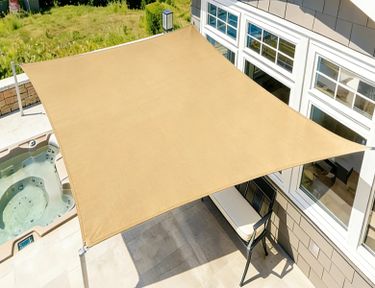
Waterproof vs Breathable Shade Sails: Pros & Cons
If you need reliable rain protection, a waterproof sun shade made from PES is the better choice. If your priority is airflow and cooling in hot climates, breathable HDPE shade sails are more suitable. Understanding the differences helps you choose the right solution for comfort, durability, and long-term outdoor use.
The Major Differences Between Waterproof PES and Breathable HDPE
The core difference between waterproof and breathable shade sails lies in how they handle air and water. A waterproof sun shade made from PES fabric is designed to block rain completely, making it suitable for areas where staying dry is essential.
In contrast, breathable HDPE fabrics allow air to pass through. This airflow helps reduce heat buildup and creates a more comfortable shaded environment. Compared to waterproof shade cloth, HDPE does not trap heat, making it a practical option for warm regions.
From a structural perspective, waterproof materials are typically tighter and heavier, while breathable fabrics are lighter and more flexible. Both options use reinforced stitching and durable corner fittings, ensuring they can withstand outdoor conditions when installed correctly.
When to Use Waterproof Shade Sails for Rain Protection
A waterproof sun shade is most useful in environments where rain protection is a priority. This includes patios used for dining, outdoor workspaces, or areas where furniture needs to stay dry.
Because waterproof materials do not allow water to pass through, proper installation is essential. The sail must be installed at an angle to ensure water runoff and prevent pooling. Without this, even high-quality waterproof shade cloth may experience sagging under accumulated water weight.
In moderate climates with occasional rain, a waterproof sun shade can extend the usability of outdoor spaces. However, it is important to consider wind conditions, as water-resistant fabrics may experience higher tension under load.
The Benefits of Breathable Shade Sails for High-Heat Climates
Breathable shade sails made from HDPE are widely used in hot and sunny environments. Their ability to allow airflow helps reduce ambient temperatures and improves comfort under the shaded area.
Research and product data indicate that breathable HDPE fabrics can lower the surrounding temperature by up to 15 degrees under certain conditions. This makes them particularly effective for patios, playgrounds, and poolside areas.
Compared to a waterproof sun shade, breathable materials reduce the risk of heat accumulation. While they do not block rain completely, they provide consistent shading and ventilation, making them a preferred alternative to waterproof shade cloth in high-heat regions.
Durability and Maintenance: Waterproof vs. Breathable
Durability depends on both material and environmental exposure. A waterproof sun shade typically has a coated surface that resists water penetration, but this coating may require maintenance over time to maintain performance.
Breathable HDPE shade sails are designed for long-term outdoor use, often featuring reinforced seams and corrosion-resistant hardware. Because they allow airflow, they may experience less stress from wind compared to tightly woven waterproof shade cloth.
Maintenance considerations:
- Waterproof materials may need periodic cleaning to prevent surface buildup
- Breathable fabrics require regular tension checks to maintain shape
- Both types benefit from removal during extreme weather
With proper care, both options can provide reliable performance over multiple seasons.
UV Protection Levels: Which Material Performs Better?
UV protection is a critical factor when choosing between a waterproof sun shade and breathable alternatives. HDPE shade sails are known to block approximately 90–95% of harmful UV rays, making them highly effective for sun protection.
Waterproof PES fabrics also provide UV resistance, but their primary advantage lies in water protection rather than airflow. In some cases, waterproof shade cloth may feel warmer underneath due to reduced ventilation.
For users focused on reducing sun exposure while maintaining comfort, breathable materials often offer a balanced solution. However, both options can contribute to safer outdoor environments when properly installed.
In addition to UV protection and airflow, users should also consider installation flexibility and seasonal adaptability when choosing between a waterproof sun shade and breathable materials. A waterproof sun shade typically requires more precise installation conditions, including a fixed slope and stronger anchor points, to maintain its performance over time.
Breathable options, compared to traditional waterproof shade cloth, are generally more forgiving during installation. They can adapt to slight variations in anchor positioning and are less sensitive to angle requirements. This makes them suitable for residential users who may not have perfectly aligned structures.
Another important factor is seasonal use. In regions with changing weather, some users prefer to switch between a waterproof sun shade and breathable shade sails depending on the season. For example, breathable setups may be used during hot summer months for cooling, while waterproof shade cloth solutions can be installed during rainy periods for protection.
This flexibility highlights that the choice is not always about selecting one material over the other, but about understanding how each performs under different conditions. By evaluating installation constraints, climate, and usage habits, users can make a more informed decision that improves both comfort and long-term value.
Final Verdict: Choosing the Right Fabric for Your Environment
Choosing between a waterproof sun shade and a breathable HDPE sail depends on your specific needs. Waterproof options are ideal for rain protection and multi-weather use, while breathable designs are better suited for hot climates where airflow and cooling are priorities.
Quick comparison:
- Choose waterproof sun shade for rain protection and covered outdoor use
- Choose breathable HDPE instead of standard waterproof shade cloth for cooling and ventilation
By aligning material choice with your environment, you can improve both comfort and durability in your outdoor space.
Additional Considerations for Long-Term Performance
Beyond basic material differences, long-term performance depends on installation quality and environmental exposure. A properly installed waterproof sun shade requires sufficient slope, typically between 20–40 degrees, to ensure effective drainage. Without this, water accumulation may increase fabric stress and reduce lifespan.
Breathable shade sails, while more forgiving in terms of water flow, still require correct tensioning. Loose installation can lead to flapping, which accelerates wear. Compared to loosely installed waterproof shade cloth, a well-tensioned HDPE sail maintains its structure more consistently over time.
Another important factor is hardware quality. Both waterproof and breathable systems benefit from reinforced seams and stainless steel fittings, which improve resistance to corrosion and mechanical stress.
Practical Scenarios: How to Choose Based on Use
In real-world applications, the decision between a waterproof sun shade and breathable fabric often comes down to how the space is used daily.
For example, outdoor dining areas or commercial seating zones often prioritize dryness, making waterproof solutions more suitable. In contrast, residential patios in hot climates may benefit more from breathable shade sails that improve airflow and comfort.
In mixed-use environments, some users combine both materials. A waterproof sun shade can be installed over key areas, while breathable sections provide ventilation nearby. This hybrid approach offers flexibility without compromising performance.
Conclusion
Both waterproof and breathable shade sails offer practical benefits depending on your environment and usage needs. Selecting the right material ensures better comfort, durability, and performance over time. For reliable quality and well-designed options, SUNLAX provides solutions that help you choose the right balance between protection and ventilation.