

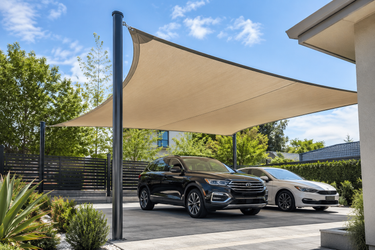
Shade Sail for Driveway: Protect Your Car from UV Damage
A shade sail for driveway is one of the most practical ways to protect vehicles from daily sun exposure, heat buildup, and weather while maintaining an open and modern outdoor space. Compared with building a permanent carport, a properly installed carport shade sail offers flexible coverage, lower installation costs, and customizable sizing for different driveway layouts. Whether you want reliable vehicle sun protection, a waterproof carport sail for rainy climates, or a breathable canopy that reduces heat, choosing the right shade sail can significantly improve both vehicle protection and outdoor comfort.
For most residential properties, a properly tensioned shade sail provides an effective alternative to a traditional carport. It can shield parked vehicles from prolonged UV exposure, reduce interior temperatures during hot weather, and improve outdoor usability without requiring major structural construction. Available in breathable HDPE and waterproof PES fabrics, today's shade sails can be customized to fit single driveways, double parking spaces, or irregular layouts, making them a versatile solution for many homeowners.
Why Use a Shade Sail for Your Driveway or Carport?
Parking outdoors exposes vehicles to much more than direct sunlight. Over time, ultraviolet (UV) radiation, heat, rain, bird droppings, and falling debris can all affect a vehicle's appearance and long-term value. Installing a shade sail for driveway creates a protective barrier while preserving ventilation and the open feel of your property. Unlike bulky roof structures, a driveway sun shade can be installed in many residential settings with minimal visual impact. It also adapts well to existing homes where constructing a permanent garage or carport may not be practical.
How UV Rays Damage Vehicle Paint and Interiors
Ultraviolet radiation gradually breaks down automotive paint coatings. Continuous exposure can accelerate oxidation, fading, and loss of gloss, particularly on darker-colored vehicles that absorb more heat.
The interior also experiences significant wear. Dashboard materials, leather seats, steering wheels, and plastic trim may crack, discolor, or become brittle after years of direct sun exposure. During summer, interior temperatures can easily exceed 140°F (60°C) on hot days, creating uncomfortable conditions while increasing stress on interior materials.
A quality outdoor car shade helps reduce direct UV exposure while lowering cabin temperatures through effective shading. Depending on the fabric type, many commercial-grade shade sails can block up to 90–95% of harmful UV rays while still allowing outdoor airflow.
Cost Comparison: Shade Sail vs. Permanent Carport vs. Umbrella
When evaluating different parking shade solutions, cost is often one of the deciding factors. A permanent carport offers excellent long-term protection but usually requires permits, foundations, and professional construction. These additional requirements significantly increase overall project costs.
| Option | UV Protection | Rain Protection | Installation Cost | Custom Sizes |
|---|---|---|---|---|
| Shade Sail | Excellent | Optional | Low–Moderate | Yes |
| Permanent Carport | Excellent | Excellent | High | Limited |
| Patio Umbrella | Moderate | Limited | Low | No |
A patio umbrella is affordable but typically provides limited coverage and is not designed for protecting an entire vehicle. Strong winds can also reduce its practicality for driveway applications.
A carport shade sail sits between these two options. It delivers wide-area coverage, requires fewer structural modifications, and can often be installed much faster. For many homeowners, a custom driveway shade provides an attractive balance between affordability, durability, and appearance.
What Size Shade Sail Do You Need for a Driveway?
Selecting the correct size is just as important as choosing the right material. An undersized sail leaves portions of the vehicle exposed, while an oversized sail may create installation challenges or insufficient fabric tension.
Before purchasing a shade sail for driveway, carefully measure both the parking area and available anchor points.
Standard Vehicle Coverage Dimensions
A typical passenger vehicle measures approximately 15–16 feet long and 6–7 feet wide, while SUVs and pickup trucks generally require additional clearance.
Rather than matching vehicle dimensions exactly, the driveway sun shade should extend beyond the vehicle footprint to provide protection throughout the day as the sun changes position.
Many installers recommend allowing additional coverage around all sides to improve vehicle sun protection and reduce sunlight reaching doors and windows during morning and afternoon hours.
As a general guideline:
Single-car driveway: approximately 12 × 16 ft to 14 × 20 ft
Double driveway: approximately 20 × 20 ft to 20 × 24 ft
Larger vehicles may require additional overhang for full-day shade coverage.
Measuring for Single vs. Double Driveways
For a single driveway, measurements should include the parking space as well as any nearby walls, fences, or support posts that may serve as anchor points.
Double driveways require more planning because two vehicles increase both coverage requirements and tension loads. In some cases, one large carport shade sail is appropriate. In others, two separate sails provide better tension distribution and easier maintenance.
If the driveway has unusual dimensions or curved edges, a custom driveway shade often produces a cleaner installation than selecting the closest standard size. Overhang and Clearance Considerations Proper clearance improves both appearance and functionality.
The sail should be mounted high enough to allow vehicle movement without obstruction while maintaining sufficient tension across the fabric.
Leaving reasonable overhang beyond the parking area also improves protection during early morning and late afternoon, when sunlight reaches vehicles at lower angles.
Adequate clearance is equally important for drainage, ventilation, and safe access around the parked vehicle.
Best Shape for a Driveway Shade Sail
Not every driveway has the same layout. The ideal shade sail for driveway depends on available space, parking arrangement, surrounding buildings, and desired coverage area.
Choosing the right shape improves both shade performance and installation efficiency.
Rectangle Shade Sails: Maximum Coverage
Rectangle sails are the most common choice for residential driveways because they efficiently cover long parking spaces.
Their elongated shape aligns well with most vehicles, reducing exposed areas while creating a clean architectural appearance.
For homeowners seeking maximum vehicle sun protection, rectangle designs often provide the largest usable shaded area with relatively simple installation.
Square Shade Sails: Compact Spaces
Square sails perform well in smaller driveways, compact parking pads, or homes with limited installation space.
They offer balanced tension across all corners and work particularly well when parking areas have nearly equal width and length.
In urban homes where space is limited, a square outdoor car shade can provide effective protection without overwhelming the property's exterior appearance.
Multiple Sails for L-Shaped or Wide Driveways
Large or irregular driveways may benefit from multiple shade sails rather than one oversized canopy.
Using two or more sails allows installers to follow the driveway's layout more accurately while creating visual interest. Different heights and orientations can also improve airflow and reduce wind pressure.
This approach is especially useful for wide parking areas, corner driveways, or homes accommodating several vehicles.
Waterproof vs. Breathable: Which Is Better for a Carport?
The ideal shade sail for driveway material depends largely on your local climate and how you use the parking area. Some homeowners prioritize complete rain protection, while others are more concerned with reducing heat buildup during hot summer months.
Understanding the differences between waterproof and breathable fabrics helps ensure you choose the right carport shade sail for long-term performance.
Waterproof PES Sails: Full Rain Protection
A waterproof carport sail is typically made from polyester (PES) fabric with a protective coating that prevents water from passing through the material.
This option is well suited for regions that experience frequent rainfall. It keeps vehicles drier, minimizes water dripping onto the parking area, and provides year-round protection from light rain and falling debris.
Because waterproof fabrics do not allow water to pass through, proper installation is especially important. The sail should always be installed with adequate tension and a noticeable slope so rainwater can run off instead of collecting on the surface. Homeowners who regularly load groceries, unload children, or access their vehicles during rainy weather often appreciate the additional shelter provided by a waterproof carport sail.
Breathable HDPE Sails: Airflow and Heat Reduction
Breathable shade sails are commonly manufactured from high-density polyethylene (HDPE), a knitted fabric designed to allow air and heat to pass through while blocking a high percentage of harmful UV radiation.
Unlike waterproof materials, HDPE promotes continuous airflow, helping reduce heat accumulation beneath the canopy. This makes it an excellent choice for hot, dry, or humid climates where lowering vehicle temperature is the primary goal.
Many premium HDPE fabrics are capable of blocking up to 95% of UV rays while maintaining ventilation. Improved airflow also reduces wind pressure on the sail, which can contribute to greater stability in breezy conditions.
If your primary objective is vehicle sun protection rather than rain coverage, a breathable driveway sun shade is often the more practical solution.
How to Install a Driveway Shade Sail
Even the highest-quality shade sail for driveway performs best when it is installed correctly. Proper planning not only improves appearance but also enhances safety, drainage, and long-term durability.
Before installation, identify all available anchor points and verify that they are structurally capable of supporting the tension required for the sail.
Anchor Options: Wall, Post, or Existing Structure
Most driveway installations rely on one or a combination of three anchor types.
Existing building walls can provide strong attachment points when appropriate mounting hardware is used. Heavy-duty steel or aluminum posts are another popular option, especially for open driveways without nearby structures.
Some homeowners may also attach a carport shade sail to reinforced pergolas or other permanent outdoor structures, provided they are designed to withstand the additional loads created by tensioned fabric and wind.
Regardless of the anchor type, all hardware should be corrosion-resistant and rated for outdoor use to ensure reliable long-term performance.
Recommended Height and Slope for Water Runoff
Proper height contributes to both usability and drainage.
Most residential installations position the lowest corner high enough to allow comfortable vehicle access while maintaining sufficient clearance for taller SUVs or pickup trucks.
When installing a waterproof carport sail, creating a noticeable slope is essential. A difference in corner heights encourages rainwater to flow off the fabric instead of pooling in the center, which can increase stress on both the sail and its mounting hardware.
Maintaining consistent fabric tension also helps preserve the sail's shape and reduces movement during windy conditions.
Professional vs. DIY Installation for Large Driveways
Many homeowners successfully install smaller driveway sun shade systems themselves, particularly when suitable anchor points already exist.
However, larger installations often involve longer spans, heavier fabrics, and higher tension loads. In these cases, professional installation can help ensure proper engineering, accurate positioning, and secure hardware installation. For oversized or irregular layouts, expert guidance may also improve the overall appearance and longevity of the custom driveway shade.
Professional installation may also be beneficial when working with concrete footings, steel support posts, or large custom-made sails that require higher tension for long-term stability.
Custom vs. Ready-Made Driveway Shade Sails
Both standard-size and custom-made products have their advantages. The right choice depends on your driveway dimensions, available mounting locations, and desired appearance.
While ready-made sails work well for many common layouts, custom solutions often deliver a better overall fit.
Why Custom Size Wins for Irregular Driveways
Not every driveway follows standard dimensions. Curved boundaries, angled parking spaces, existing trees, or nearby buildings can all make standard sizes difficult to install effectively.
A custom driveway shade is manufactured according to the exact measurements of your installation area, allowing the sail to fit more precisely between anchor points.
This tailored approach improves fabric tension, reduces gaps in coverage, and creates a cleaner architectural appearance. It can also minimize unnecessary overhang while maximizing usable shade for vehicle sun protection.
For homeowners with unique driveway layouts, custom sizing often results in a more efficient and visually balanced installation.
Custom sizing also reduces unnecessary fabric wrinkles, improves appearance, and minimizes areas where rainwater or wind pressure may accumulate.
What to Look for in a Quality Driveway Sail
A high-quality shade sail for driveway should combine durable materials with reliable construction.
Look for UV-resistant fabrics designed for long-term outdoor exposure, reinforced webbing around the edges, and stainless steel corner hardware that resists corrosion. Double-stitched seams and high-quality thread can further improve durability under continuous tension.
It's also worth considering whether the manufacturer offers custom sizing, multiple fabric options, and clear installation guidance. These features can make the purchasing process easier while helping ensure the finished sail meets your specific needs.
For homeowners planning to use their outdoor car shade throughout the year, investing in quality materials typically provides better long-term value than choosing the lowest-priced option.
Maintenance Tips for Driveway Shade Sails
Routine maintenance helps extend the service life of any shade sail for driveway while keeping it looking its best. Inspect the fabric and hardware periodically for signs of wear, loose fittings, or accumulated debris. Leaves and branches should be removed regularly to prevent unnecessary stress on the sail.
Avoid using pressure washers, bleach, or abrasive cleaners, as these may shorten the lifespan of UV-resistant coatings or damage knitted fabrics.
Most breathable HDPE sails can be cleaned with mild soap, water, and a soft brush. Waterproof fabrics should also be cleaned gently to avoid damaging their protective surface coating.
After severe storms or unusually strong winds, inspect all anchor points and tensioning hardware before continued use. Promptly tightening loose components can help maintain proper fabric tension and reduce long-term wear.
If you live in an area with heavy snowfall or extreme seasonal weather, temporarily removing the sail during the harshest conditions may further extend its lifespan.
Final Thoughts
A well-designed shade sail for driveway offers an effective balance of vehicle sun protection, attractive outdoor design, and flexible installation. Whether you choose a breathable HDPE driveway sun shade for improved airflow or a waterproof carport sail for all-weather coverage, selecting the correct size, shape, and installation method will maximize both performance and durability.
If you're looking for a custom driveway shade, choosing a manufacturer that provides made-to-measure sizing, durable outdoor fabrics, and reliable installation hardware can help ensure a better long-term result. Sunlax Outdoor offers both custom and ready-made shade sails in breathable HDPE and waterproof PES materials, making it a practical option for a wide range of residential driveway and carport applications.