

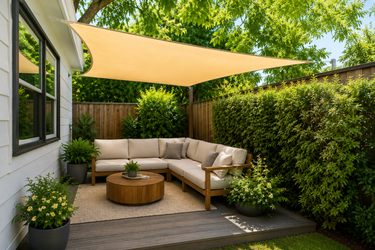
The Best Shade Solutions for Small Outdoor Spaces: L-Shapes & Nooks
The best shade solution for a small outdoor space is usually not the biggest canopy or the cheapest off-the-shelf cover. For compact patios, narrow side yards, L-shaped terraces, and awkward corners, the most effective approach is a shade system designed around the exact footprint of the space. In practice, that often means combining a small backyard shade strategy with custom sizing, careful anchor placement, and the right fabric choice. For difficult layouts such as a corner patio or an L-shaped deck, a corner patio shade or L-shape sun sail can provide more usable coverage than a standard square umbrella or a fixed pergola.
Small outdoor areas are often the hardest to shade well because every inch matters. A poorly placed support post can block circulation. A sail that is too large can overwhelm the space. A sail that is too small may leave the seating area exposed at the exact time of day when sun protection is needed most. The goal is not simply to add shade, but to make a compact outdoor space more comfortable, functional, and visually balanced.
Why Small Outdoor Spaces Need a Different Shade Strategy
Large patios and open lawns give homeowners flexibility. Small spaces do not.
A compact courtyard, balcony-adjacent patio, side yard dining nook, or L-shaped deck often has limited mounting options, uneven boundaries, and multiple functions packed into a small footprint. In one area, you may need to shade a dining table. In another, you may want to keep a reading chair or plant shelf out of harsh afternoon sun. This is why a generic one-size-fits-all product often performs poorly in small outdoor areas.
The best small backyard shade plan begins with identifying how the space is actually used. A nook for morning coffee may need different coverage than a corner play area or a grilling zone. In many cases, shade design for small spaces is less about maximum coverage and more about targeted, efficient coverage.
The Common Challenges of L-Shapes, Corners, and Tight Nooks
Awkward layouts are one of the main reasons homeowners struggle to find effective shade. Small outdoor spaces are rarely perfect rectangles.
An L-shaped patio may wrap around the house, leaving one section exposed at midday and another section exposed later in the afternoon. A recessed corner seating area may be shaded by the building in the morning but fully exposed in the evening. A narrow nook between walls may have excellent privacy but almost no room for a freestanding umbrella base.
These are the situations where a corner patio shade or L-shape sun sail becomes especially useful. Instead of forcing a standard product into a space it was not designed for, a shaped sail can follow the footprint more closely and shade the area that people actually use.
Why Standard Shade Products Often Fall Short in Small Spaces
Off-the-shelf shade products are typically designed around simple dimensions and standard layouts. That works well for open patios and broad backyards, but less well for tight, irregular spaces.
A center-pole umbrella can interrupt movement in a narrow seating area. A pergola may require a larger footprint than the patio itself. A rectangular sail may cover one half of an L-shaped space well while leaving the other half exposed. In very compact areas, even the angle of the sun matters more because there is less room to reposition furniture or add a second shade element later.
For homeowners working with a tight footprint, the more practical approach is often a custom small backyard shade solution that fits the space rather than forcing the space to fit the product.
The Best Shade Solutions for Small Outdoor Spaces
There is no single best shade product for every small yard or patio. The right answer depends on the shape of the space, the amount of sun exposure, and how permanent the installation needs to be. Still, some solutions consistently perform better than others in compact layouts.
Shade Options That Work Well in Tight Outdoor Areas
- Custom shade sails for L-shaped patios, narrow side yards, and corner seating areas
- Triangle sails for small corners where a full rectangular canopy would feel too heavy
- Overlapping sails for split-use spaces that need shade at different times of day
- Privacy screen + shade combinations for patios that need both screening and sun protection
- Wall-mounted sail systems for spaces where ground-mounted posts would take up too much room
Among these options, custom shade sails are often the most flexible because they can be made to fit non-standard layouts without occupying floor space.
Why Shade Sails Work So Well in Small Backyards and Patio Corners
Shade sails are especially useful in compact spaces because they create overhead coverage without adding bulky frames or center supports.
That matters in small patios where circulation space is limited. A sail mounted between walls, posts, or structural attachment points can free up the floor below for dining chairs, storage benches, planters, or loungers. In a narrow courtyard or side yard, this makes the space feel more open and usable.
A well-planned small backyard shade system also helps visually soften a hard-edged outdoor area. Rather than making the space feel crowded, a tensioned sail can create a cleaner, lighter profile than a pergola or umbrella.
When a Corner Patio Shade Is Better Than a Full-Cover Structure
Not every patio needs full enclosure. In fact, for small outdoor spaces, partial but strategic shade is often more practical.
A corner patio shade works particularly well when the main activity zone is concentrated in one part of the patio. For example, if your dining table sits in the inside corner of an L-shaped deck, shading that one zone may deliver more comfort than trying to cover the entire deck edge to edge.
Corner shade also works well for:
- breakfast nooks exposed to morning sun
- lounge chairs in a west-facing corner
- compact outdoor offices or reading spaces
- pet rest areas that need summer sun protection
This kind of targeted shading is often more cost-efficient and easier to install than a large all-over structure.
How an L-Shape Sun Sail Solves Awkward Layout Problems
An L-shape sun sail is useful because it follows the logic of the space instead of fighting it.
In some layouts, one standard sail is enough. In others, the best result comes from combining two connected or overlapping sails that visually read as one shading system. For example, one triangular sail can cover a dining nook while a second rectangular sail extends protection toward a grill station or lounge area. In effect, the two sails create an L-shaped zone of comfort even if the sails themselves are not literally cut in one continuous L form.
This is often the smartest solution for patios that wrap around corners or outdoor spaces divided by walls, built-in seating, or planters.
Planning a Shade Sail for an L-Shaped or Corner Space
Good results depend on planning. A shade sail that looks beautiful online may perform poorly if the site geometry is ignored.
Before choosing a sail shape, it helps to map the exact zone that needs shade during the hottest part of the day. In small spaces, the difference between shading a table edge and shading the chairs around it can completely change how usable the patio feels.
Key planning questions to answer before ordering
- Which part of the patio gets the strongest sun, and at what time?
- Is the goal to shade seating, dining, plants, pets, or circulation areas?
- Are there walls, fences, beams, or posts that can serve as anchor points?
- Does the space need breathable airflow, rain protection, or both?
- Will a single sail work, or would two smaller sails create better coverage?
These questions help prevent one of the most common mistakes in small backyard shade projects: buying a sail based on overall yard size instead of the actual usable zone.
Why Custom Sizing Matters More in Small Spaces
Custom sizing is helpful in any outdoor project, but it becomes especially important when the space is small.
In a large backyard, a slight mismatch between the shade product and the patio footprint may be acceptable. In a compact courtyard or balcony-side nook, that same mismatch can block a doorway, leave the main seating area uncovered, or create an awkward visual imbalance.
A custom sail allows the homeowner to work around obstacles such as:
- sliding doors and windows
- built-in benches or outdoor kitchens
- angled fence lines
- offset posts
- narrow passages between structures
For these spaces, a corner patio shade or L-shape sun sail designed to exact measurements usually performs better than a standard sail chosen by approximation.
Choosing the Right Fabric for Small Outdoor Shade
Fabric choice affects not only appearance but also comfort, drainage, and long-term maintenance.
For hot climates and daily use, breathable HDPE is often the practical choice because it blocks UV while allowing air to pass through. This can help small spaces feel less stuffy, especially in enclosed courtyards or side yards with limited airflow.
Waterproof PES fabric can be a better fit if the goal is rain protection as well as sun protection. This may suit a small dining patio or balcony-adjacent seating area where keeping cushions dry is important. However, waterproof sails require proper slope and tension so that water drains correctly.
In other words, the best small backyard shade solution is not only about shape. It also depends on whether the space needs airflow, rain coverage, or a balance of both.
Breathable vs Waterproof: Which Is Better for a Nook or Small Patio?
The answer depends on how the space is used.
| Fabric Type | Best For | Main Advantage | Main Consideration |
|---|---|---|---|
| HDPE Breathable Shade Sail | Hot patios, poolside nooks, pet areas, airflow-sensitive spaces | UV protection with ventilation | Does not provide full rain blocking |
| PES Waterproof Shade Sail | Dining corners, outdoor seating near doors, rain-sensitive furniture areas | Sun + rain protection | Needs proper slope and tension for runoff |
For a tight nook that gets hot and stagnant, breathable HDPE is often the better everyday option. For a compact entertaining space where weather protection matters, waterproof PES may be the better choice.
Design Tips for Making a Small Outdoor Space Feel Bigger
Shade should improve comfort without making the space feel crowded. That is especially important in urban patios, side yards, and small backyards.
Design ideas that work well with compact shade layouts
- Use lighter fabric colors to keep the area visually open
- Mount sails high enough to preserve sightlines and airflow
- Match sail angles to the architecture so the installation feels intentional
- Combine shade with vertical planting rather than bulky floor planters
- Use one tailored sail instead of several unrelated shade products whenever possible
These design decisions can make a small patio feel more finished and more spacious at the same time.
Installation Considerations for Small and Irregular Spaces
Installation quality matters just as much as the sail itself. A well-designed sail can still perform poorly if the attachment points are weak or badly positioned.
For small patios, one of the biggest decisions is whether to use wall mounts, freestanding posts, or a combination of both. Wall-mounted systems are often ideal when floor space is limited, but they require structurally sound fixing points. Posts may be necessary when the space is open on one side, though they should be positioned carefully so they do not interfere with movement.
For waterproof sails, slope matters. For breathable sails, tension and geometry matter just as much. In either case, a compact site leaves less room for error, which is another reason why custom measurement and thoughtful layout planning are so valuable.
Real-Life Small Space Applications That Benefit from Custom Shade
Some of the best uses for a corner patio shade or L-shape sun sail are spaces that seem difficult to cover with conventional products.
Examples include:
- an L-shaped townhouse patio with a dining table in one corner and a grill in the other
- a narrow side yard converted into a coffee nook
- a compact backyard with a sectional sofa tucked against two walls
- a small courtyard where a standard umbrella would block movement
- a dog rest area beside the patio that needs UV protection without a permanent roof
In each of these cases, the success of the project depends less on the total size of the yard and more on how accurately the shade solution responds to the usable footprint.
Conclusion
Small outdoor spaces can be some of the most enjoyable areas of a home, but only when they are comfortable enough to use regularly. That is why the best shade solution is rarely the one with the biggest footprint. It is the one that fits the space, supports the way you live, and improves comfort without wasting room.
For homeowners working with tight corners, awkward layouts, and compact patios, a tailored small backyard shade strategy often delivers better results than a generic cover. A well-designed corner patio shade or L-shape sun sail can turn an overlooked nook into a functional dining area, reading corner, or outdoor retreat.
If you need a more precise solution, SUNLAX offers custom HDPE breathable shade sails and PES waterproof shade sails in triangle, rectangle, quadrilateral, and custom shapes. For L-shaped patios, narrow nooks, and other hard-to-fit outdoor areas, that flexibility can make a noticeable difference in both comfort and appearance.